I suppose this background explains why I now have a burgeoning collection of rare pre-war German bikes. Over the last two decades, I have collected some of the finest examples of BMW motorcycles from the 1930's. We have spent hours researching and restoring these motorcycles to their exact factory specifications.
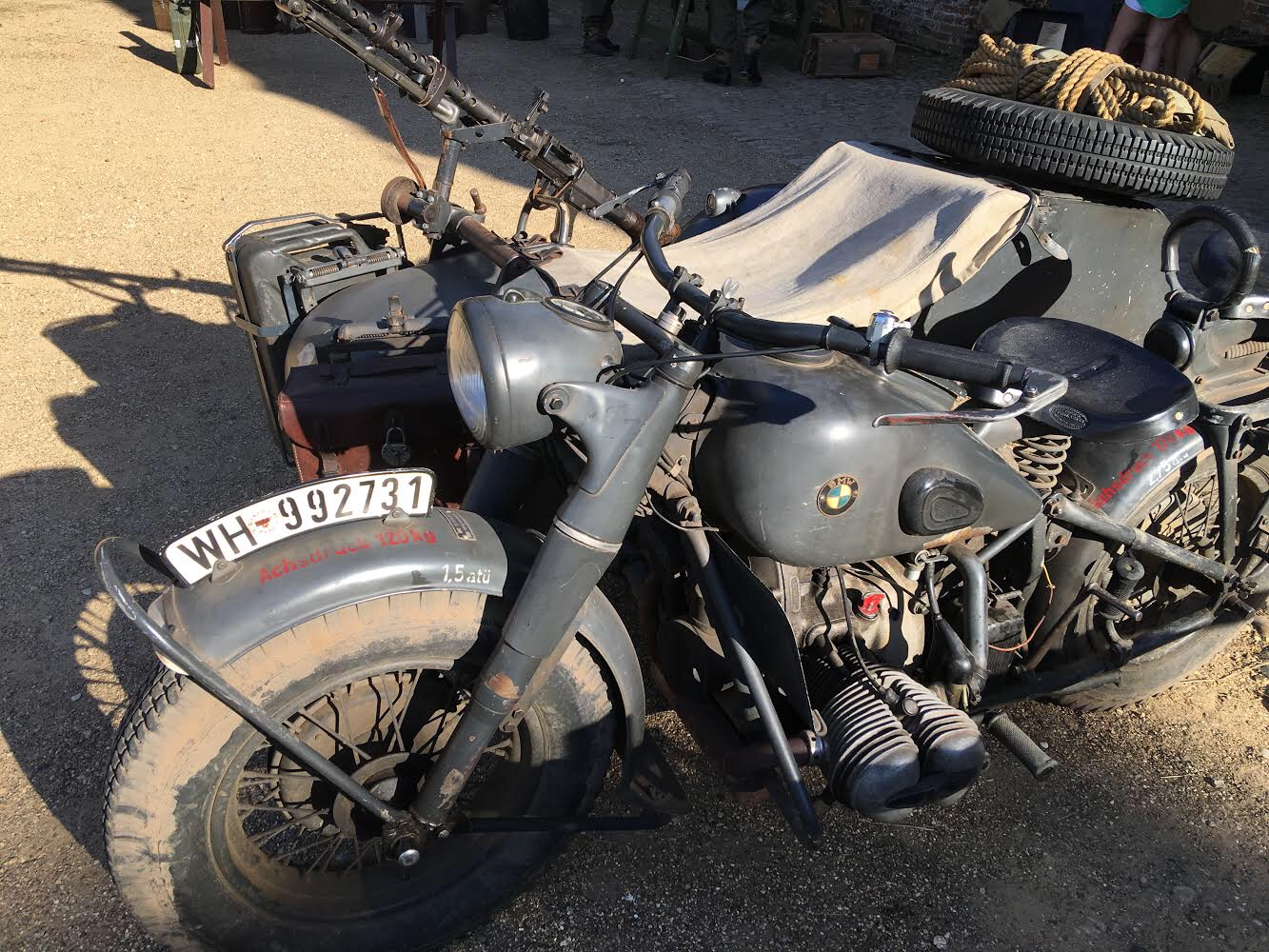
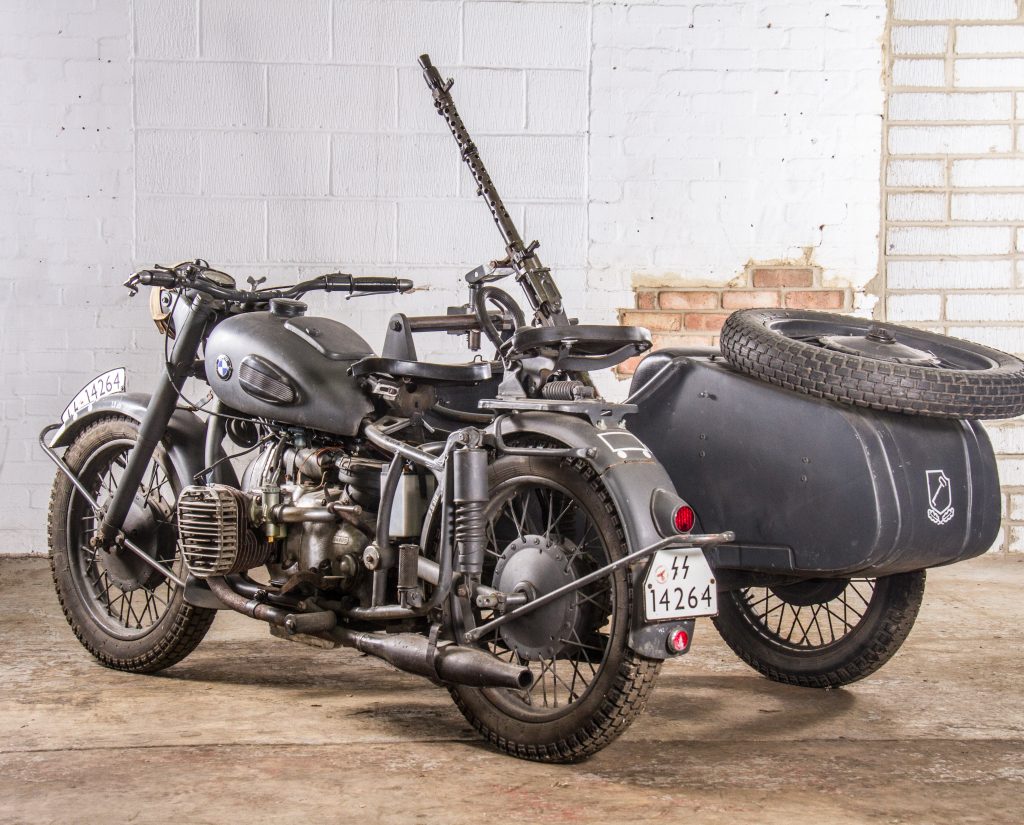
This 1943 BMW R75 was one of hundreds of classic motorcycles at the Barber Vintage Motorsports Museum in Birmingham, Alabama.
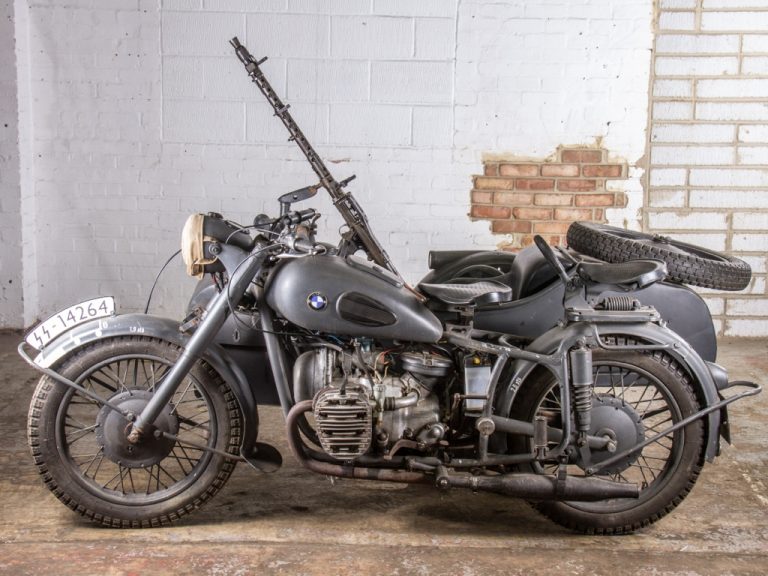
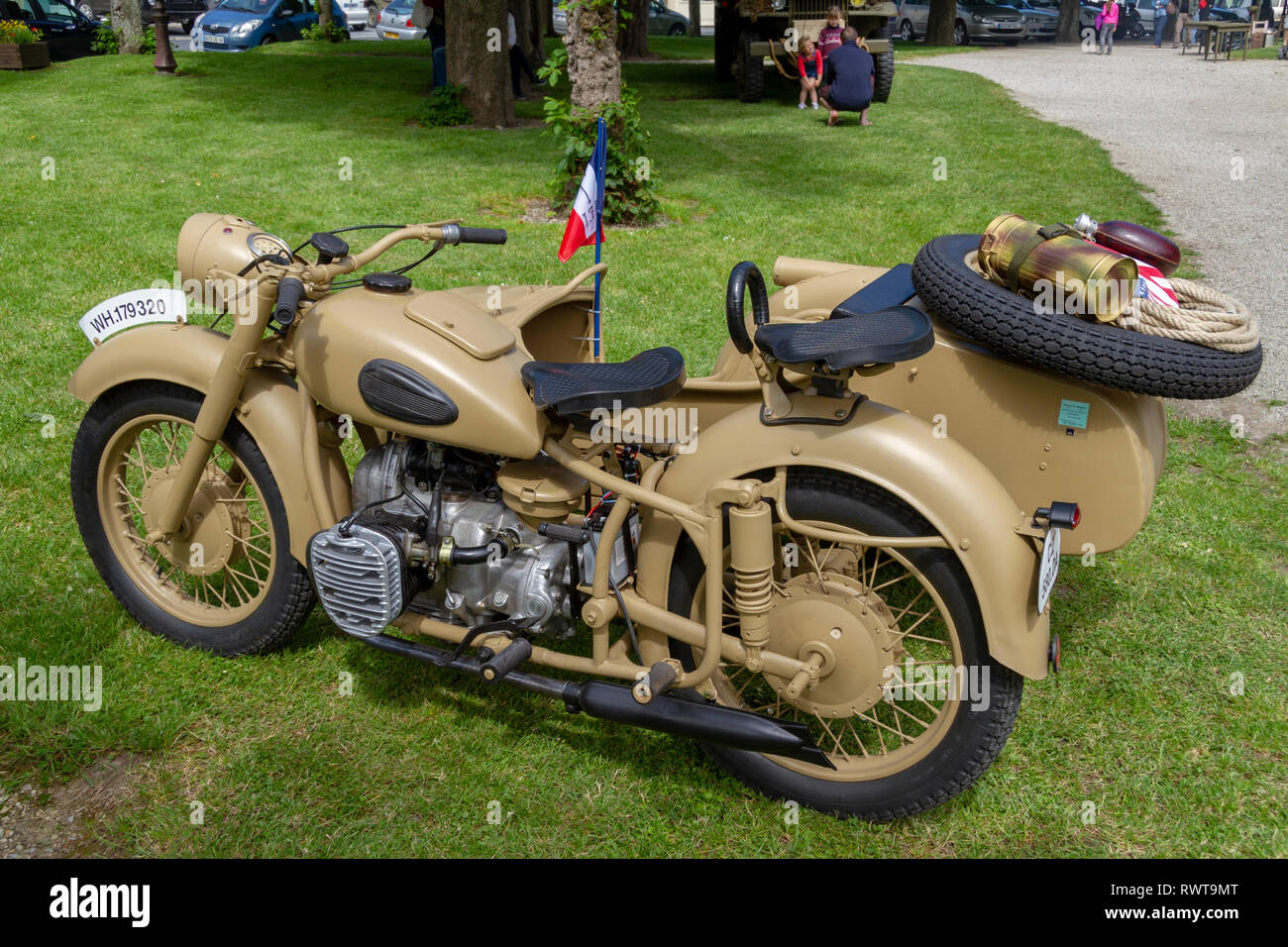
The 1943 BMW R75 Shown Here The BMW R75 you see here was built in 1943, although its early history is lost it was doubtless used by the German military as they took 100% of the production with very few exceptions. It's possible that this bike was used on the Eastern Front as it's fitted with the sidecar and handlebar heaters designed to keep armed motorcycle troops from freezing to death.
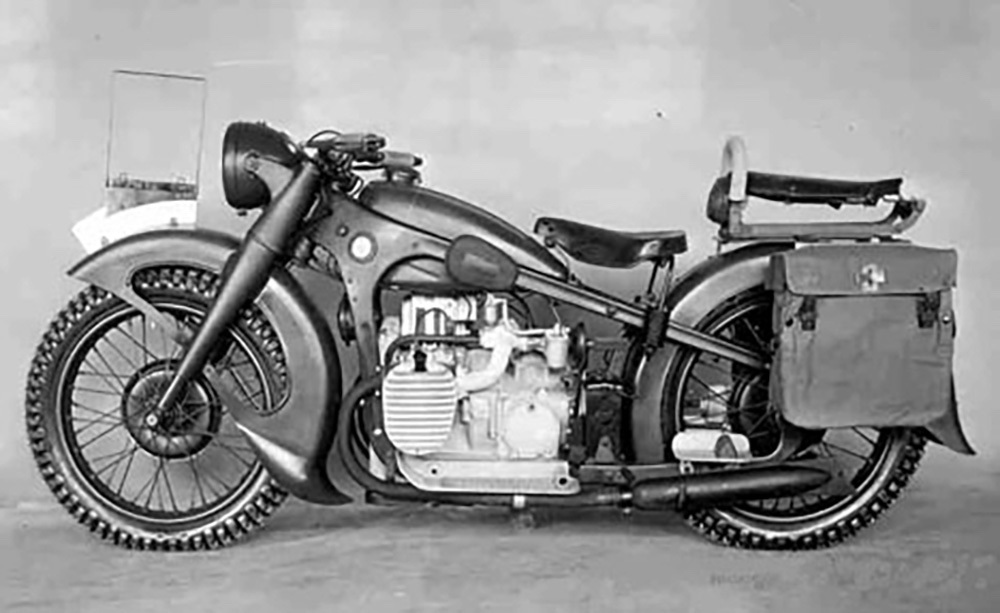
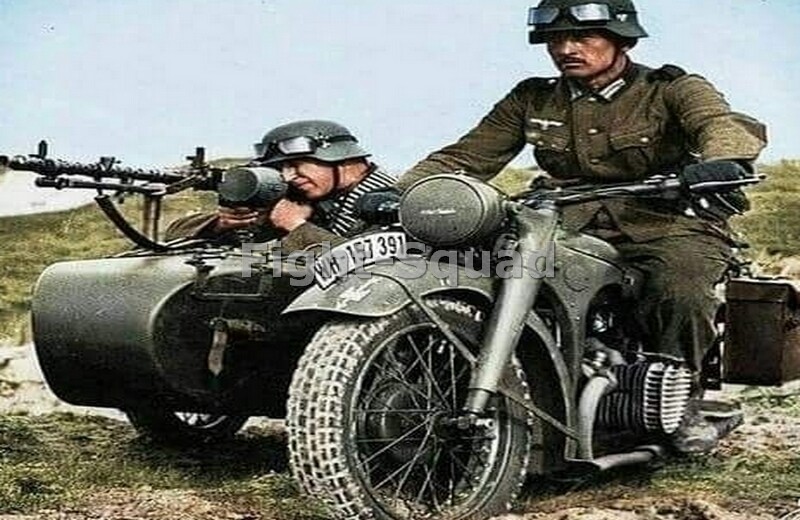
BMW R-75 1941-1944 (Type 275/2) The 1941 R75, as used by the Wehrmacht, was by far the most sophisticated motorcycle of the day. The machine had telescopic front forks, but lacked rear suspension (as did most motorcycles of the time) and frequently appeared in solo guise.
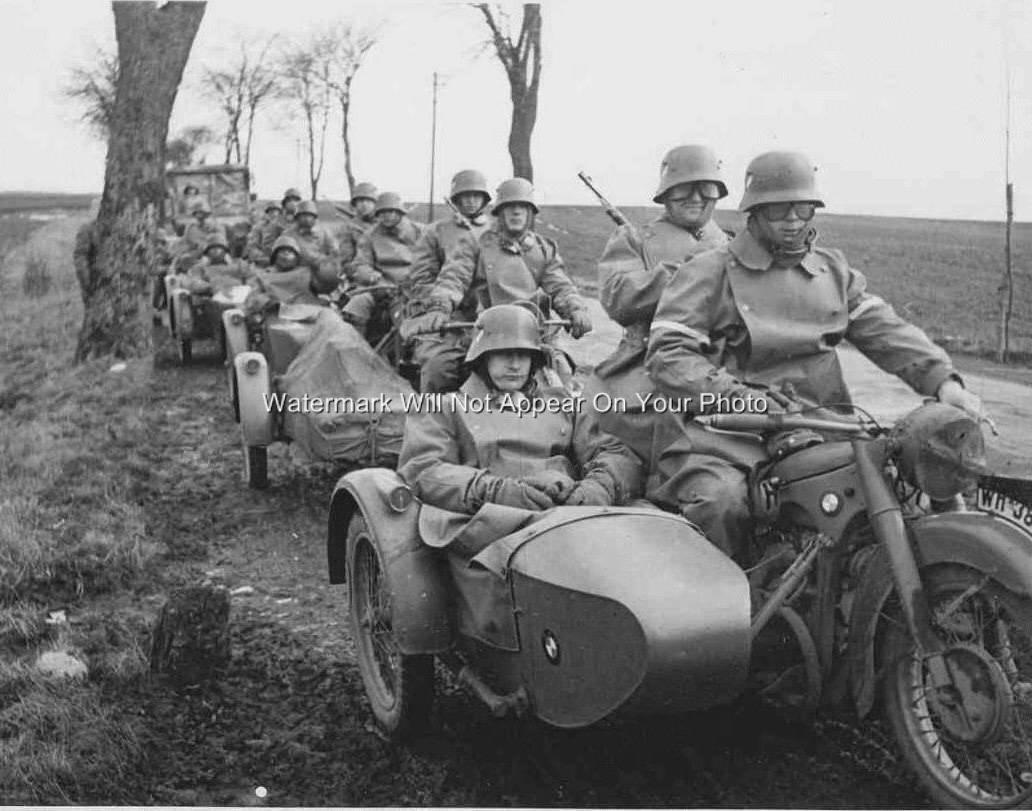
World War Two Germany Army Troops Soldiers Old BMW R75 Motorcycles ...
I suppose this background explains why I now have a burgeoning collection of rare pre-war German bikes. Over the last two decades, I have collected some of the finest examples of BMW motorcycles from the 1930's. We have spent hours researching and restoring these motorcycles to their exact factory specifications.
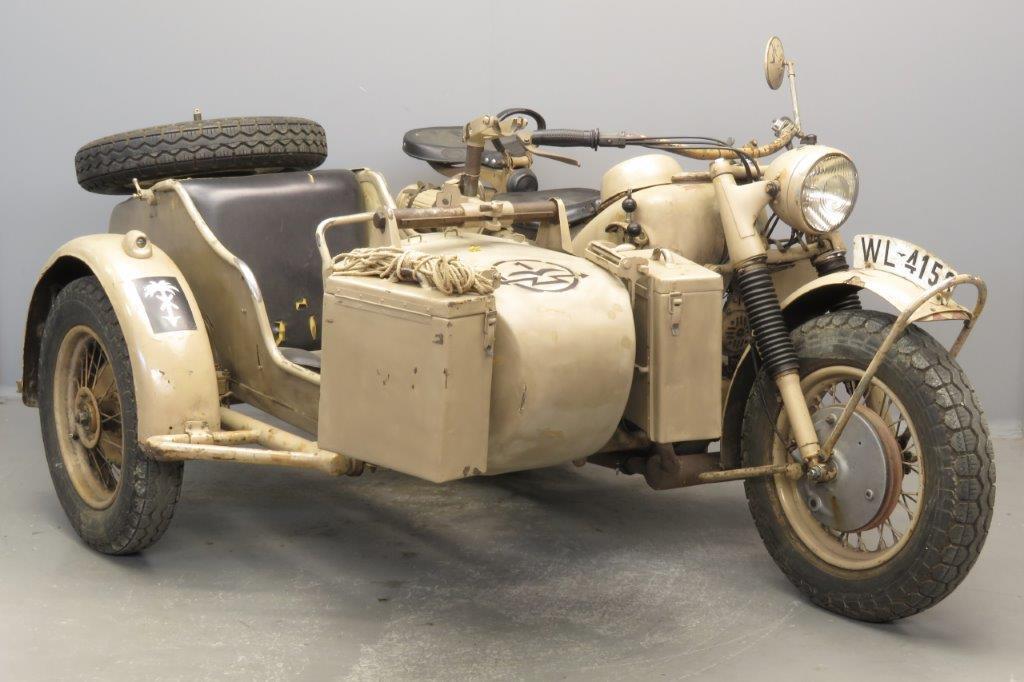
The BMW R75 is a World War II -era motorcycle and sidecar combination produced by the German company BMW. The BMW R75 stands out by its integral two-wheel drive design, with drive shafts to both its rear wheel and the third side-car wheel, from a locking differential, as well as a transfer case offering both road and off.
The motorcycle with sidecar was popularized in the inherent mobility of German Army, especially in the early stages of World War 2. These type of military motorcycles came in three classes fitting light, medium and heavy categorizations and were divided into these groupings by their respective cc output - 350cc or less, 500cc or less, and 500c or more.
This 1943 BMW R75 was one of hundreds of classic motorcycles at the Barber Vintage Motorsports Museum in Birmingham, Alabama.
German BMW R75 Motorcycle With Sidecar- MG 34- Replica - WW2 Vehicles
I suppose this background explains why I now have a burgeoning collection of rare pre-war German bikes. Over the last two decades, I have collected some of the finest examples of BMW motorcycles from the 1930's. We have spent hours researching and restoring these motorcycles to their exact factory specifications.
This 1943 BMW R75 was one of hundreds of classic motorcycles at the Barber Vintage Motorsports Museum in Birmingham, Alabama.
The BMW R75 is a World War II -era motorcycle and sidecar combination produced by the German company BMW. The BMW R75 stands out by its integral two-wheel drive design, with drive shafts to both its rear wheel and the third side-car wheel, from a locking differential, as well as a transfer case offering both road and off.
The motorcycle with sidecar was popularized in the inherent mobility of German Army, especially in the early stages of World War 2. These type of military motorcycles came in three classes fitting light, medium and heavy categorizations and were divided into these groupings by their respective cc output - 350cc or less, 500cc or less, and 500c or more.
DESERT STORM TROOPERS: The Secret History Of BMW’s Boxer Motorcycles
I suppose this background explains why I now have a burgeoning collection of rare pre-war German bikes. Over the last two decades, I have collected some of the finest examples of BMW motorcycles from the 1930's. We have spent hours researching and restoring these motorcycles to their exact factory specifications.
The BMW R75 is a World War II -era motorcycle and sidecar combination produced by the German company BMW. The BMW R75 stands out by its integral two-wheel drive design, with drive shafts to both its rear wheel and the third side-car wheel, from a locking differential, as well as a transfer case offering both road and off.
Somewhere between 16,500 and 17,500 BMW motorcycles were built between 1940 and 1945. These heavy German motorcycle combinations were so admired as war.
The motorcycle with sidecar was popularized in the inherent mobility of German Army, especially in the early stages of World War 2. These type of military motorcycles came in three classes fitting light, medium and heavy categorizations and were divided into these groupings by their respective cc output - 350cc or less, 500cc or less, and 500c or more.
DESERT STORM TROOPERS: The Secret History Of BMW’s Boxer Motorcycles
The BMW R75 motorbike should be added to this illustrious list as the motorbike was a strong and hardy vehicle used by all branches of the German armed forces. The BMW R75 motorbike ran reconnaissance, signaling, ambulance, policing, and even assault duties at the front line and in the rear.
This 1943 BMW R75 was one of hundreds of classic motorcycles at the Barber Vintage Motorsports Museum in Birmingham, Alabama.
The 1943 BMW R75 Shown Here The BMW R75 you see here was built in 1943, although its early history is lost it was doubtless used by the German military as they took 100% of the production with very few exceptions. It's possible that this bike was used on the Eastern Front as it's fitted with the sidecar and handlebar heaters designed to keep armed motorcycle troops from freezing to death.
The BMW R75 is a World War II -era motorcycle and sidecar combination produced by the German company BMW. The BMW R75 stands out by its integral two-wheel drive design, with drive shafts to both its rear wheel and the third side-car wheel, from a locking differential, as well as a transfer case offering both road and off.
WW2 Picture Photo German Soldiers Wehrmacht Motorbike Motorcycle BMW ...
In response, Bavarian Motor Works (BMW) introduced the R75, a three-wheel motorcycle and sidecar combination that was fast, maneuverable, and capable of handling rough conditions. The Germans widely deployed the R75 across multiple theaters of war, from the North African desert to the vast Eastern Front.
The motorcycle with sidecar was popularized in the inherent mobility of German Army, especially in the early stages of World War 2. These type of military motorcycles came in three classes fitting light, medium and heavy categorizations and were divided into these groupings by their respective cc output - 350cc or less, 500cc or less, and 500c or more.
The BMW R75 is a World War II -era motorcycle and sidecar combination produced by the German company BMW. The BMW R75 stands out by its integral two-wheel drive design, with drive shafts to both its rear wheel and the third side-car wheel, from a locking differential, as well as a transfer case offering both road and off.
The BMW R75 motorbike should be added to this illustrious list as the motorbike was a strong and hardy vehicle used by all branches of the German armed forces. The BMW R75 motorbike ran reconnaissance, signaling, ambulance, policing, and even assault duties at the front line and in the rear.
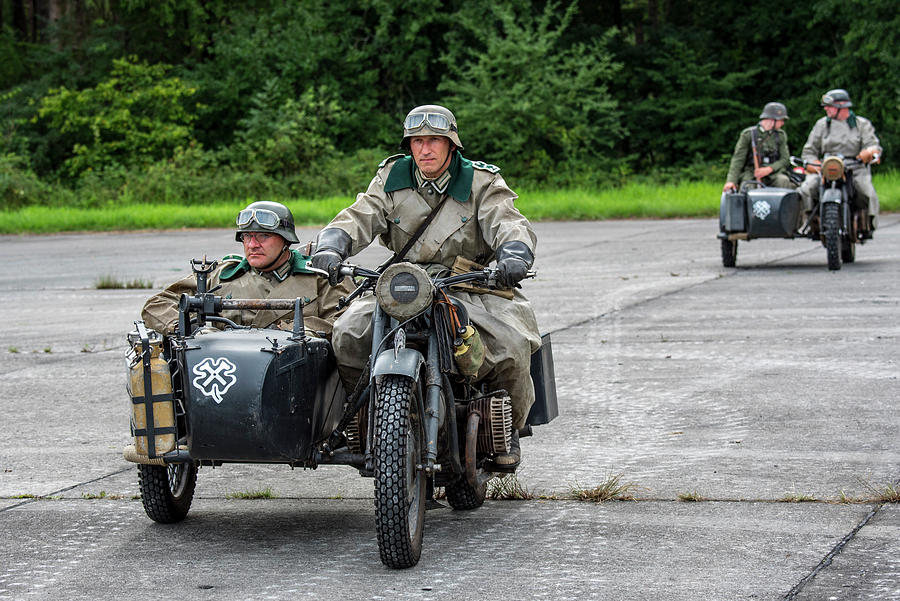
Bmw R75 During A Second World War Reenactment. It Is A Sidecar ...
This 1943 BMW R75 was one of hundreds of classic motorcycles at the Barber Vintage Motorsports Museum in Birmingham, Alabama.
To understand the BMW R75's place in history, you first have to understand BMW's history with the Nazi party. The company's involvement in WW2 certainly isn't the proudest moment in its history.
Somewhere between 16,500 and 17,500 BMW motorcycles were built between 1940 and 1945. These heavy German motorcycle combinations were so admired as war.
The motorcycle with sidecar was popularized in the inherent mobility of German Army, especially in the early stages of World War 2. These type of military motorcycles came in three classes fitting light, medium and heavy categorizations and were divided into these groupings by their respective cc output - 350cc or less, 500cc or less, and 500c or more.
German WW2 BMW R12 Motorcycle With Sidecar | Cars & Motorcycles | Pinterest
In response, Bavarian Motor Works (BMW) introduced the R75, a three-wheel motorcycle and sidecar combination that was fast, maneuverable, and capable of handling rough conditions. The Germans widely deployed the R75 across multiple theaters of war, from the North African desert to the vast Eastern Front.
The 1943 BMW R75 Shown Here The BMW R75 you see here was built in 1943, although its early history is lost it was doubtless used by the German military as they took 100% of the production with very few exceptions. It's possible that this bike was used on the Eastern Front as it's fitted with the sidecar and handlebar heaters designed to keep armed motorcycle troops from freezing to death.
BMW R-75 1941-1944 (Type 275/2) The 1941 R75, as used by the Wehrmacht, was by far the most sophisticated motorcycle of the day. The machine had telescopic front forks, but lacked rear suspension (as did most motorcycles of the time) and frequently appeared in solo guise.
The motorcycle with sidecar was popularized in the inherent mobility of German Army, especially in the early stages of World War 2. These type of military motorcycles came in three classes fitting light, medium and heavy categorizations and were divided into these groupings by their respective cc output - 350cc or less, 500cc or less, and 500c or more.
German World War Two Motorcycle With Sidecar (Bmw R75) In Sainte-Marie ...
I suppose this background explains why I now have a burgeoning collection of rare pre-war German bikes. Over the last two decades, I have collected some of the finest examples of BMW motorcycles from the 1930's. We have spent hours researching and restoring these motorcycles to their exact factory specifications.
The 1943 BMW R75 Shown Here The BMW R75 you see here was built in 1943, although its early history is lost it was doubtless used by the German military as they took 100% of the production with very few exceptions. It's possible that this bike was used on the Eastern Front as it's fitted with the sidecar and handlebar heaters designed to keep armed motorcycle troops from freezing to death.
This 1943 BMW R75 was one of hundreds of classic motorcycles at the Barber Vintage Motorsports Museum in Birmingham, Alabama.
In response, Bavarian Motor Works (BMW) introduced the R75, a three-wheel motorcycle and sidecar combination that was fast, maneuverable, and capable of handling rough conditions. The Germans widely deployed the R75 across multiple theaters of war, from the North African desert to the vast Eastern Front.
BMW R75 - Angry 9 - WWII Military Vehicles And Prop Hire Specialists
The BMW R75 motorbike should be added to this illustrious list as the motorbike was a strong and hardy vehicle used by all branches of the German armed forces. The BMW R75 motorbike ran reconnaissance, signaling, ambulance, policing, and even assault duties at the front line and in the rear.
The 1943 BMW R75 Shown Here The BMW R75 you see here was built in 1943, although its early history is lost it was doubtless used by the German military as they took 100% of the production with very few exceptions. It's possible that this bike was used on the Eastern Front as it's fitted with the sidecar and handlebar heaters designed to keep armed motorcycle troops from freezing to death.
The BMW R75 is a World War II -era motorcycle and sidecar combination produced by the German company BMW. The BMW R75 stands out by its integral two-wheel drive design, with drive shafts to both its rear wheel and the third side-car wheel, from a locking differential, as well as a transfer case offering both road and off.
This 1943 BMW R75 was one of hundreds of classic motorcycles at the Barber Vintage Motorsports Museum in Birmingham, Alabama.
The Evolution Of The Motorcycle - Part Four: World War II | MotoSport
Somewhere between 16,500 and 17,500 BMW motorcycles were built between 1940 and 1945. These heavy German motorcycle combinations were so admired as war.
BMW R-75 1941-1944 (Type 275/2) The 1941 R75, as used by the Wehrmacht, was by far the most sophisticated motorcycle of the day. The machine had telescopic front forks, but lacked rear suspension (as did most motorcycles of the time) and frequently appeared in solo guise.
The BMW R75 motorbike should be added to this illustrious list as the motorbike was a strong and hardy vehicle used by all branches of the German armed forces. The BMW R75 motorbike ran reconnaissance, signaling, ambulance, policing, and even assault duties at the front line and in the rear.
This 1943 BMW R75 was one of hundreds of classic motorcycles at the Barber Vintage Motorsports Museum in Birmingham, Alabama.
German WW2 BMW Military Motorcycle Photograph By Arterra Picture ...
The motorcycle with sidecar was popularized in the inherent mobility of German Army, especially in the early stages of World War 2. These type of military motorcycles came in three classes fitting light, medium and heavy categorizations and were divided into these groupings by their respective cc output - 350cc or less, 500cc or less, and 500c or more.
BMW R-75 1941-1944 (Type 275/2) The 1941 R75, as used by the Wehrmacht, was by far the most sophisticated motorcycle of the day. The machine had telescopic front forks, but lacked rear suspension (as did most motorcycles of the time) and frequently appeared in solo guise.
To understand the BMW R75's place in history, you first have to understand BMW's history with the Nazi party. The company's involvement in WW2 certainly isn't the proudest moment in its history.
This 1943 BMW R75 was one of hundreds of classic motorcycles at the Barber Vintage Motorsports Museum in Birmingham, Alabama.
BMW R75 Wehrmachtsgespann & Sidecar 1942
The motorcycle with sidecar was popularized in the inherent mobility of German Army, especially in the early stages of World War 2. These type of military motorcycles came in three classes fitting light, medium and heavy categorizations and were divided into these groupings by their respective cc output - 350cc or less, 500cc or less, and 500c or more.
The BMW R75 is a World War II -era motorcycle and sidecar combination produced by the German company BMW. The BMW R75 stands out by its integral two-wheel drive design, with drive shafts to both its rear wheel and the third side-car wheel, from a locking differential, as well as a transfer case offering both road and off.
To understand the BMW R75's place in history, you first have to understand BMW's history with the Nazi party. The company's involvement in WW2 certainly isn't the proudest moment in its history.
The 1943 BMW R75 Shown Here The BMW R75 you see here was built in 1943, although its early history is lost it was doubtless used by the German military as they took 100% of the production with very few exceptions. It's possible that this bike was used on the Eastern Front as it's fitted with the sidecar and handlebar heaters designed to keep armed motorcycle troops from freezing to death.
WW2 German BMW Sidecar Motorcycles Photograph By Arterra Picture ...
The BMW R75 motorbike should be added to this illustrious list as the motorbike was a strong and hardy vehicle used by all branches of the German armed forces. The BMW R75 motorbike ran reconnaissance, signaling, ambulance, policing, and even assault duties at the front line and in the rear.
To understand the BMW R75's place in history, you first have to understand BMW's history with the Nazi party. The company's involvement in WW2 certainly isn't the proudest moment in its history.
The motorcycle with sidecar was popularized in the inherent mobility of German Army, especially in the early stages of World War 2. These type of military motorcycles came in three classes fitting light, medium and heavy categorizations and were divided into these groupings by their respective cc output - 350cc or less, 500cc or less, and 500c or more.
BMW R-75 1941-1944 (Type 275/2) The 1941 R75, as used by the Wehrmacht, was by far the most sophisticated motorcycle of the day. The machine had telescopic front forks, but lacked rear suspension (as did most motorcycles of the time) and frequently appeared in solo guise.
German BMW R75 Motorcycle With Sidecar- MG 34- Replica - WW2 Vehicles
The 1943 BMW R75 Shown Here The BMW R75 you see here was built in 1943, although its early history is lost it was doubtless used by the German military as they took 100% of the production with very few exceptions. It's possible that this bike was used on the Eastern Front as it's fitted with the sidecar and handlebar heaters designed to keep armed motorcycle troops from freezing to death.
In response, Bavarian Motor Works (BMW) introduced the R75, a three-wheel motorcycle and sidecar combination that was fast, maneuverable, and capable of handling rough conditions. The Germans widely deployed the R75 across multiple theaters of war, from the North African desert to the vast Eastern Front.
Somewhere between 16,500 and 17,500 BMW motorcycles were built between 1940 and 1945. These heavy German motorcycle combinations were so admired as war.
The BMW R75 motorbike should be added to this illustrious list as the motorbike was a strong and hardy vehicle used by all branches of the German armed forces. The BMW R75 motorbike ran reconnaissance, signaling, ambulance, policing, and even assault duties at the front line and in the rear.
1943 Bmw R75, Ww2 German Production Military Motorcycle With Sidecar
The 1943 BMW R75 Shown Here The BMW R75 you see here was built in 1943, although its early history is lost it was doubtless used by the German military as they took 100% of the production with very few exceptions. It's possible that this bike was used on the Eastern Front as it's fitted with the sidecar and handlebar heaters designed to keep armed motorcycle troops from freezing to death.
To understand the BMW R75's place in history, you first have to understand BMW's history with the Nazi party. The company's involvement in WW2 certainly isn't the proudest moment in its history.
Somewhere between 16,500 and 17,500 BMW motorcycles were built between 1940 and 1945. These heavy German motorcycle combinations were so admired as war.
The motorcycle with sidecar was popularized in the inherent mobility of German Army, especially in the early stages of World War 2. These type of military motorcycles came in three classes fitting light, medium and heavy categorizations and were divided into these groupings by their respective cc output - 350cc or less, 500cc or less, and 500c or more.
I suppose this background explains why I now have a burgeoning collection of rare pre-war German bikes. Over the last two decades, I have collected some of the finest examples of BMW motorcycles from the 1930's. We have spent hours researching and restoring these motorcycles to their exact factory specifications.
To understand the BMW R75's place in history, you first have to understand BMW's history with the Nazi party. The company's involvement in WW2 certainly isn't the proudest moment in its history.
The 1943 BMW R75 Shown Here The BMW R75 you see here was built in 1943, although its early history is lost it was doubtless used by the German military as they took 100% of the production with very few exceptions. It's possible that this bike was used on the Eastern Front as it's fitted with the sidecar and handlebar heaters designed to keep armed motorcycle troops from freezing to death.
BMW R-75 1941-1944 (Type 275/2) The 1941 R75, as used by the Wehrmacht, was by far the most sophisticated motorcycle of the day. The machine had telescopic front forks, but lacked rear suspension (as did most motorcycles of the time) and frequently appeared in solo guise.
In response, Bavarian Motor Works (BMW) introduced the R75, a three-wheel motorcycle and sidecar combination that was fast, maneuverable, and capable of handling rough conditions. The Germans widely deployed the R75 across multiple theaters of war, from the North African desert to the vast Eastern Front.
The BMW R75 motorbike should be added to this illustrious list as the motorbike was a strong and hardy vehicle used by all branches of the German armed forces. The BMW R75 motorbike ran reconnaissance, signaling, ambulance, policing, and even assault duties at the front line and in the rear.
Somewhere between 16,500 and 17,500 BMW motorcycles were built between 1940 and 1945. These heavy German motorcycle combinations were so admired as war.
The motorcycle with sidecar was popularized in the inherent mobility of German Army, especially in the early stages of World War 2. These type of military motorcycles came in three classes fitting light, medium and heavy categorizations and were divided into these groupings by their respective cc output - 350cc or less, 500cc or less, and 500c or more.
This 1943 BMW R75 was one of hundreds of classic motorcycles at the Barber Vintage Motorsports Museum in Birmingham, Alabama.
The BMW R75 is a World War II -era motorcycle and sidecar combination produced by the German company BMW. The BMW R75 stands out by its integral two-wheel drive design, with drive shafts to both its rear wheel and the third side-car wheel, from a locking differential, as well as a transfer case offering both road and off.